

The United Nations Office at Geneva
Multimedia Newsroom
PRESS BRIEFING BY THE UNITED NATIONS INFORMATION SERVICE
2 May 2023
Conflict in Sudan
Alessandra Vellucci, for the United Nations Information Service (UNIS), said that the UN and partners were doing their best to reboot the humanitarian response in the country.
Jens Laerke, for the Office for the Coordination of Humanitarian Affairs (OCHA), stated that, as of this morning, the USD 1.7 billion Humanitarian Response Plan for Sudan for 2023 was only 14 percent funded. OCHA was calling on all donors to support the humanitarian organizations without delay so that the much-needed assistance could be provided shortly. Partners on the ground, where the situation allowed, continued to operate, informed Mr. Laerke. UN Relief Chief Martin Griffiths was in the region and had held a series of meetings in Nairobi, including with the President of Kenya and the Foreign Minister of Canada. He had called on the parties to the conflict to protect civilians and civilian infrastructure, allow safe passage for civilians fleeing areas of hostilities, respect humanitarian workers and assets, facilitate relief operations, and respect medical personnel, transport, and facilities.
Olga Sarrado, for the United Nations Refugee Agency (UNHCR), said that over 100,000 refugees were estimated among those who had now left Sudan to neighbouring countries, including Sudanese refugees, South Sudanese returning home prematurely, and others who were themselves refugees in Sudan.
Alongside governments and partners, UNHCR had determined an initial planning figure of more than 800,000 refugees and returnees that might flee Sudan to neighbouring countries. The figures were projections used for financial and operational planning. Of the total, around 600,000 would be Sudanese refugees, as well as refugees hosted by Sudan. In addition, more than 200,000 South Sudanese and other refugees hosted by Sudan might return home prematurely.
Ms. Sarrado said that the most significant cross-border movements so far had been Sudanese refugees arriving in Chad and Egypt, and South Sudanese returning to South Sudan. Most new arrivals in Chad and South Sudan were women and children. While UNHCR had large operations in many neighbouring countries, the previous week they had deployed additional emergency teams and activated our global supply chain, including orders for some 70,000 core relief items from our global stockpiles for Chad and South Sudan.
UNHCR statement is available here.
Paul Dillon, for the International Organization for Migration (IOM), said that there were some 334,000 internally displaced persons because of fighting, according to the IOM Displacement Tracking Matrix. The number of the displaced over the past two weeks exceeded all conflict-related displacements recorded in Sudan in 2022. Most areas remained inaccessible to humanitarian agencies, but the IOM was able to conduct remote interviews through its network. About 72 percent of all new internal displacements were reported in the Darfur alone, informed Mr. Dillon. In addition to new data on internal displacements, the matrix was collecting data at border crossings. Fleeing to safety was complicated by a number of factors, including safety and the lack of fuel. In Ethiopia, where hundreds of refugees were arriving daily, there was a lack of WASH services, said Mr. Dillon. IOM was appealing to donors to come forward and support IOM’s response in all border areas, including Ethiopia and Chad.
Replying to numerous questions from the media, Ms. Sarrado said that the majority of the those fleeing the country were women and children, but there were also older people, including men. It was very difficult to predict how the displacement situation would grow, which primarily depend on how the conflict itself would evolve. She said that an estimated 24,469 South Sudanese refugees who had been in Sudan would have returned to their country by now; in addition, 2,806 Sudanese nationals had also fled to South Sudan.
Mr. Laerke said that the looting of warehouses in Sudan was an enormous problem, but some stocks were still there. Wherever the security situation allowed, and supplies were available, they would be distributed without delay. Guns needed to fall silent for two reasons: for civilians to be protected, and for humanitarian organizations to safely get to people in need. That was the primary rationale of the UN Relief Chief’s dispatchment to the region.
Tarik Jašarević, for the World Health organization (WHO), said that six containers for treating of injuries and severe acute malnutrition were being offloaded in Port Sudan. Another 13 metric tons of supplies would be flown in from the WHO logistics hub in Dubai as soon as that became possible. There was a need to treat traumas and wounds, but the lack of clean water was also an issue. The 28 April figures from the Ministry of Health showed that there were 528 deaths and over 4,400 injuries. WHO was continuing to help Sudanese medical workers in Khartoum and elsewhere, who were the real heroes on the ground. Mr. Jašarević stressed that the biggest health risk to Sudanese people was the lack of access to health services. Finally, he said that the WHO had conducted a risk assessment on the seized National Public Health Laboratory in Khartoum, a risk which was estimated as “moderate”.
Mr. Dillon explained that there was no one set template for the displacement within the country. People were fleeing from Darfur in all directions, for example. In response to the rapidly emerging needs in neighboring countries’ border areas, the IOM had provided some emergency relief to those who had arrived to Chad. However, the funds were finite, and more help was needed. IOM was particularly focused on the internally displaced people within Sudan. Up to 1,000 people were arriving to Ethiopian border regions every day, he said, stretching the capacities of the receiving country. Active fighting in multiple locations around the country forced many people to remain barricaded in their homes, he said.
New survey results show health systems starting to recover from pandemic
Dr. Rudi Eggers, Director of Integrated Health Services at the World Health Organization (WHO), said that, after three years of the COVID-19 pandemic, health systems in countries had started showing the first major signs of health system recovery, according to the WHO interim report on the “Fourth round of the global pulse survey on continuity of essential health services during the COVID-19 pandemic: November 2022–January 2023”. By early 2023, countries had reported experiencing reduced disruptions in the delivery of routine health services but highlighted the need to invest in recovery and stronger resilience for the future.
Persisting disruptions were due to both demand- and supply-side factors, including low levels of health care-seeking in communities as well as limited availability of health workers and other health-care resources such as open clinics or available stocks of medicines and products. Most countries reported at least one bottleneck to scaling up access to essential COVID-19 tools, with health workforce issues and lack of funding representing the most common barriers.
Dr. Eggers explained that another important step towards system recovery and transition was that most countries had made progress in integrating COVID-19 services into routine health service delivery. Most countries had also started to apply what they had learnt during the COVID-19 pandemic, including through the institutionalization of a number of innovative service disruption mitigation strategies into routine health service delivery. Countries expressed need for WHO support to address remaining challenges in the COVID-19 context and beyond, most frequently related to health workforce strengthening, building the monitoring capacities of health services, designing primary health care-oriented models of care, governance, policy and planning and financial planning and funding.
Full report is available here.
Responding to questions, Mr. Eggers said that the fact that people were once again able to access health services would surely save lives. Almost all countries in the world had experienced disruptions in their national health services, but those with weaker systems had suffered more, and were now recovering more slowly. He also explained that some regions of the world were more responsive to the survey than others.
Responding to a question, Tarik Jašarević, for the World Health organization (WHO), said that the COVID-19 IHR Emergency Committee would meet on 4 May, but it was not known yet when the outcome would be available.
Secretary-General’s activities
Alessandra Vellucci, for the United Nations Information Service (UNIS), reminded that the Secretary-General was in Doha, Qatar, hosting a meeting of special envoys on Afghanistan to reach points of commonality on key issues, such as human rights, in particular women’s and girls’ rights, inclusive governance, countering terrorism and drug trafficking. He would speak from Doha in the early afternoon today.
From Doha, the Secretary-General would fly to Nairobi, where he would chair the Chief Executives Board of the UN system. He would also meet with the Kenyan authorities and the United Nations staff.
Announcements
Catherine Huissoud, for the United Nations Conference on Trade and Development (UNCTAD), informed that UNCTAD would host the third UN Trade Forum on 8-9 May, which would focus on trade policies that could help countries and mainly developing countries grow their economies while tackling pressing global challenges and accelerating progress towards achieving the UN’s Sustainable Development Goals.
Ms. Huissoud also said that UNCTAD would present its Trade and Environment Review 2023 which highlighted the vast opportunities oceans held for developing countries to recover from the current crises and build more innovative and resilient economies. UNCTAD Secretary-General Rebeca Grynspan would travel to Moscow shortly, said Ms. Huissoud in a response to a question.
Clare Nullis, for the World Meteorological Organization (WMO), informed that on 3 May at 10 am, WMO would hold a press conference to provide an update on El Niño. Speaker would be Dr. Wilfran Moufouma Okia, Head of the WMO Regional Climate Prediction Services Division. A press release, under embargo, would be sent out shortly.
Alessandra Vellucci, for the United Nations Information Service (UNIS), informed that the Committee Against Torture was examining report of Kazakhstan today.
The Universal Periodic Review today was analysing the report of Romania.
Ms. Vellucci also said that the World Press Freedom Day would be on 3 May. The Secretary-General, in his message, in which he said: “Stop the threats and attacks. Stop detaining and imprisoning journalists for doing their jobs. Stop the lies and disinformation. Stop targeting truth and truth-tellers.” UNESCO would organize a number of events on this occasion; more information was available here.
Similar Stories
1
1
1
Press Conferences | OCHA , UN WOMEN , UNHCR , WFP , WHO , WTO , UNEP
OCHA – $160M CERF allocation to 12 underfunded crises; UNHCR – 5.8M refugee children remain out of school amid funding cuts; UN Women – Middle East escalation and food security among women/girls; WHO – Gaza supplies and overall situation; WFP – Yemen food insecurity and impact on global hunger ; UNEP - First International Conference of the Global Framework on Chemicals in Geneva | 16-20 November 2026
1
1
1
Press Conferences | UNHCR , WHO
Yemen's health system nears collapse amid conflict, causing rising casualties and medicine shortages.
1
1
1
Press Conferences | HRC
Update by the Expert Mechanism to Advance Racial Justice and Equality in Law Enforcement
1
1
1
Press Conferences | WIPO , WHO , UNICEF , UNHCR , IOM , WFP , FAO
WIPO Global Innovation Index 2026 launch and press conference, WHO Composition of influenza vaccines for the 2027 Southern Hemisphere flu season, UNICEF Yemen hunger and malnutrition; UNHCR Sudan displacement into Chad; IOM Ebola and population movements in DRC; WFP emergency food assistance in Nepal; and FAO food loss and waste.
2
1
2
Press Conferences | UNCTAD
Gaza reconstruction needs reach $71.5 billion as Palestinian economy and public finances face severe strain. Latest UNCTAD report documents the loss of decades of development gains, economic collapse in Gaza and tightening economic constraints in the West Bank.
The report identifies three immediate priorities: transferring withheld Palestinian revenues, safeguarding the banking system and aligning reconstruction support with the documented scale of damage and economic losses.
1
1
1
Press Conferences | HRC
Press conference on the situation of human rights in Nicaragua by the UN Group of Human Rights Experts
1
1
1
Press Conferences | ITU , UNHCR , WHO , WMO
YEMEN - UNHCR: Escalating conflict in Yemen could fuel more displacement, refugee movement
CLIMATE - WHO / WMO: Health and Climate impact of El Niño
1
1
1
Press Conferences | HRC , OHCHR
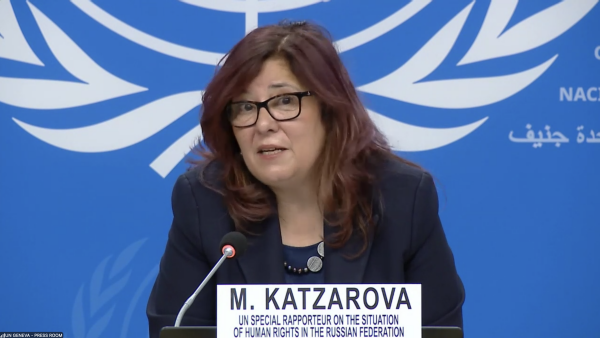
Mariana Katzarova discusses human rights in Russia as a UN Special Rapporteur.
1
1
1
Press Conferences | IOM , OHCHR , UN WOMEN , UNFPA , UNHCR , UNOPS , WHO
UN Geneva briefing: Yemen crisis worsens, urgent aid needed across multiple sectors.
1
1
1
Press Conferences | HRC
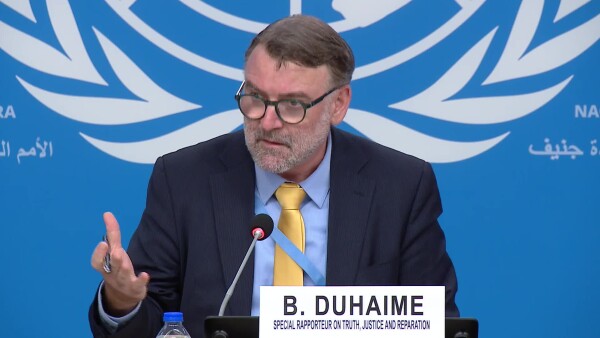
Press conference on the latest report of the Independent International Fact-Finding Mission on the Bolivarian Republic of Venezuela to the UN Human Rights Council
1
1
1
Press Conferences | OHCHR
Victims Still Waiting: A Global Briefing on Transitional Justice Around the World
2
1
2
Edited News , Press Conferences | WMO
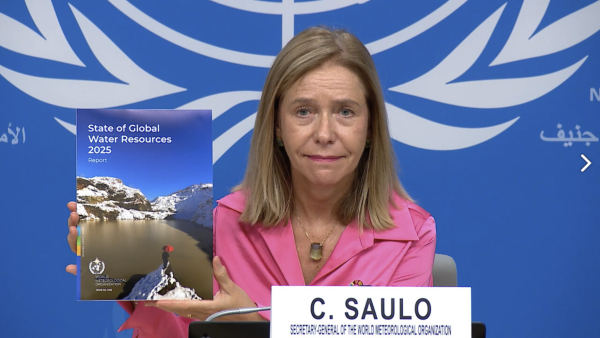
As world’s water reserves change, countries must prepare for a new reality: WMO
New data showing that rivers were at their lowest level for decades last year provides further evidence that the climate crisis is real and countries must act immediately to protect themselves from the increasing threat to communities and livelihoods, the UN World Meteorological Organization (WMO) said on Thursday.
The key findings from WMO’s State of Global Water Resources 2025 report covering the hydrological cycle and extreme events in the five-year period to last year:
- 2025 was one of driest years for river discharge in 35 years
- Past seven years have seen abnorfmal river flows
- Water storage on Earth’s land surface has decreased in past decade
- Widespread glacier loss across all regions for fourth consecutive year
- Asia and Africa are regions most affected by water-related disasters
- Water data availability has improved, but gaps remain in hard-hit areas
Highlighting the long-term decline in the Earth’s freshwater storage and glacier melt, WMO Secretary-General Celeste Saulo explained that the planet’s water reserves used to act as a planetary “savings account” that absorbed the occasional dry season, avoiding a water crisis. “One of the central stories of the 2025 report is what is happening to that savings account? And the simple answer is that we are depleting it,” she told journalists in Geneva.
Groundwater reserves are equally stretched and have been in decline since 2014, WMO’s report states, with nearly two-thirds of monitored wells worldwide showing levels lower than the historical norm and indicating a shift “further toward deficit…not recovery”.
“At the same time, we are seeing more water-related disasters,” Ms. Saulo said, while also stressing that the currently strengthening El Niño “will increase the risk of drought in some areas, and flooding in others”.
Glaciers disappearing
In 2025, for the fourth consecutive year, every major glaciated region on Earth lost ice mass, leading to short-term hazards including floods and long-term water insecurity, according to WMO.
Responding to a question about whether the changing global water cycle might have contributed to the deadly Nepal-China flooding disaster, Ms. Saulo explained that melting ice and rock was just one factor in the chain of events that ultimately sent a massive and deadly wall of water and debris downstream on 26 August, killing at least 1,367 people.
“You asked if it could happen again? Absolutely; the problem in this region is that there’s 63,700 glaciers at the last count,” she told a Press Conference in Geneva. “Even if you’re looking with remote sensing with satellites at these glaciers, you might see some faults, you might see some slight shifting, that does not mean necessarily catastrophic collapse. So, in order to plan for this, it’s very, very difficult. But the international community is looking very hard at ways in which we can bring people together to solve some of these monitoring issues.”
Data indicates that glaciers shrank between 2023 and 2025 with cumulative losses of 1,400 gigatonnes of water – or about one third of annual fresh water needs.
Every major glacier region on Earth lost ice for the fourth consecutive year.
“All 19 glacier regions around the globe lost ice; in Central Asia, Iceland, the Russian Arctic and western Canada and the United States, it was among the three worst years on record,” said Wayne Jenkinson, WMO’s Director of Hydrology and Cryosphere.
Some regions with smaller glaciers such as Central Europe, the Caucasus, the western Canada and the United States may already have reached “peak water”, Mr. Jenkinson warned.
“After this point, the glacier gives less meltwater each year simply because there is less ice left to melt. That matters for every community downstream that relies on water during hot, dry summers,” he explained.
Narelle van der Wel, WMO’s Head of Cryosphere Monitoring, Predictions and Services, stressed that while some further glacier loss is unavoidable, the eventual scale of the decline is not predetermined.
“Some glacier loss is inevitable, but total loss of glaciers is not yet inevitable,” she said, pointing to emissions reductions as central to limiting future losses.
Preparing for moving baselines
The report does not attribute every observed change to climate change alone. WMO says pressure on water resources and natural variability also contribute.
Mr. Jenkinson said governments need to prepare for “moving baselines” as historical patterns become less reliable.
“The situation 30 years ago is not where we are today,” he said. Countries, he added, need to prepare “for those changes that have really already arrived”.
ends