

The United Nations Office at Geneva
Multimedia Newsroom
Press Conferences | OHCHR , UNICEF , UNHCR , WHO , UNITED NATIONS , WMO
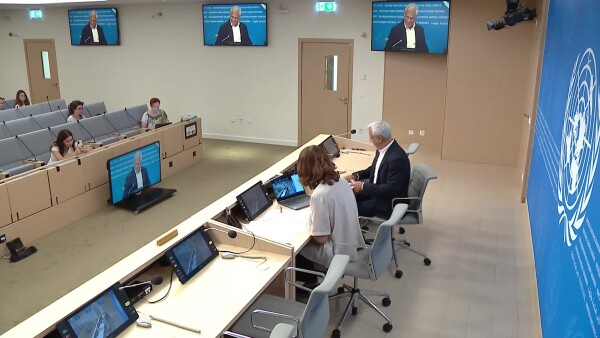
Bi-Weekly Press Briefing 26 April 2022
Ukraine
Alessandra Vellucci, for the United Nations Information Service (UNIS), recalled that UN Secretary-General António Guterres was in Moscow for a working meeting and lunch with Foreign Minister Lavrov and would also be meeting with President Putin. Mr. Guterres would then travel to Ukraine, where he was expected to hold a working session with Foreign Minister Kuleba and meet with President Zelenskyy and on 28 April.
Bhanu Bhatnagar, for the World Health Organization (WHO), speaking from Rivne Oblast near the border with Belarus, said that a technical college had been repurposed to provide services, including immunizations, to internally displaced persons (IDPs). WHO was supporting the Ministry of Health in rolling out routine and catch-up immunizations for diseases including measles, polio, tetanus and coronavirus disease (COVID-19). Health needs did not stop in times of war, which was why it was important to maintain immunization activities beyond World Immunization Week. As the past two years of pandemic had shown, leaving anyone behind meant leaving everyone behind.
Jens Laerke, for the Office for the Coordination of Humanitarian Affairs (OCHA), said that the worsening situation in Ukraine had prompted a revision of the Humanitarian Flash Appeal. Over US$ 2.25 billion were now required for needs inside Ukraine, more than double the amount requested when the appeal had been launched on 1 March. The appeal had also been extended from the original three months to six months. Furthermore, the estimated number of people in need of humanitarian aid inside the country had risen from 12 million to 15.7 million. The revised appeal aimed to help 8.7 million of the worst affected across the country and covered support ranging from cash assistance, food security, health and shelter to water, sanitation and hygiene. So far, US$ 980 million in donor support – or 44 per cent of the revised appeal – had enabled the United Nations and partners to reach 3.4 million people inside Ukraine.
Shabia Mantoo, for the United Nations Refugee Agency (UNHCR), said that in response to the growing Ukrainian refugee crisis, UNHCR and humanitarian partners were appealing for increased financial support to help refugees and the neighbouring countries generously hosting them. Through the updated Regional Refugee Response Plan for the Ukraine situation, UNHCR was seeking US$ 1.85 billion to support a projected 8.3 million refugees in neighbouring countries. So far, the war had uprooted more than 12.7 million people, of whom more than 5 million had fled as refugees and 7.7 million remained displaced inside the country. Almost 13 million more people were also estimated to be stranded in affected areas or unable to leave due to security risks.
Since the onset of the war, countries in the region had continued to keep their borders open and to welcome refugees. The remarkable mobilization of national authorities, host communities, grassroots organizations and tens of thousands of volunteers across neighbouring countries and beyond showed what could be achieved with a whole-of-society approach.
The Regional Refugee Response Plan focused on key sectors, including protection, food security, health, education, basic needs, water, sanitation, hygiene, livelihoods, resilience, energy, environment, and logistics, and on the promotion of social and economic opportunities. Transitional cash assistance, which had already benefited tens of thousands of refugees in neighbouring countries, was a key priority. The Plan aimed to ensure that all refugees fleeing Ukraine, including third-country nationals, had access to safety and international protection.
The full briefing note is available here.
Replying to journalists, Mr. Bhatnagar, for WHO, said that as of 25 April, there had been a total of 164 attacks on health care, in which 73 people had been killed and 52 injured. The state of the health system in many parts of the country’s east, including Mariupol, was unknown. Prior to the war, Ukraine had doubled measles vaccination coverage in four years, but had still fallen short of the 95 per cent coverage recommended to maintain herd immunity. In addition, the roll-out of the polio vaccination in response to an outbreak just before the war had been disrupted: only 44 per cent of targeted children had been reached. Though COVID-19 vaccine coverage was only 40 per cent, so far the conflict had not triggered a massive resurgence, thanks in part to the mobile vaccination clinics set up by the Ministry of Health.
In response to questions, Ms. Mantoo, for UNHCR, said that the figure of 8.3 million refugees was a planning figure based on population movements and possible scenarios depending on the dynamics of the conflict. The Regional Refugee Response Plan ran until the end of 2022. While a detailed breakdown of the origin of the refugees was not available because the data was compiled by host country authorities, refugees were coming from all parts of the country. Nearly 1.7 million people had entered Ukraine since 28 February, but those were unlikely to be sustainable returns. Although other conflicts, such as those in Syria, Venezuela and Afghanistan, had generated large refugee flows, the scale and speed of the Ukrainian refugee crisis was unprecedented in recent times. UNHCR was still in the emergency phase of the crisis and was not yet involved in resettlement efforts. Most of the refugees were expected to remain in their first country of refuge. According to figures provided by the Russian authorities, some 105,000 Ukrainians had fled to the Russian Federation.
Also in response to questions, Paul Dillon, for the International Organization for Migration (IOM), said that the figure of 7.7 million IDPs represented 17 per cent of the pre-war population and was an increase of 1.2 million since the third week of March. In addition to cash-based interventions, which had so far reached 15,000 people of the targeted 40,000, IOM and partners had launched the first phase of a programme to rehabilitate student dormitories and hotels that had been damaged in order to provide safe accommodation to 1 million IDPs. The immediate focus was on the most vulnerable, namely, single-parent households, persons with disabilities and their carers. A quarter of survey respondents had indicated that their top priority was basic food.
Ebola outbreak
In response to a question, Margaret Harris, for the World Health Organization (WHO), said that there had been a new outbreak of Ebola in north-western Democratic Republic of the Congo, with a few cases identified. Genomic sequencing had indicated that the outbreak was a new event. The authorities had swung into action, mobilizing experienced teams and setting up treatment centres and case tracing.
UNEP Report on Sand and Sustainability
Pascal Peduzzi, Director of GRID-Geneva with the United Nations Environment Programme (UNEP), said that UNEP had launched the 2022 report “Sand and Sustainability: 10 strategic recommendations to avoid a crisis”. The world used 50 billion tons of sand a year, enough to build a wall 27 metres wide and 27 metres high around the planet. Sand was critical to economic development and was needed to build vital infrastructure. However, extracting sand from places where it played an active role, such as rivers and coastal or marine ecosystems, could lead to erosion, the salination of aquifers, loss of protection against storm surges and impacts on biodiversity. Sand must be recognized as a strategic resource and, to achieve sustainable development, drastic changes had to be made to the way products, infrastructure and services were produced, built and consumed.
Announcements
Alessandra Vellucci, for the United Nations Information Service (UNIS), on behalf of the Office of the Special Envoy of the Secretary-General for Syria, announced that United Nations Special Envoy for Syria Mr. Geir O. Pedersen would be briefing the Security Council at 9 p.m. A transcript would be circulated after the briefing.
On behalf of the World Intellectual Property Organization (WIPO), Ms. Vellucci said that the theme for World Intellectual Property Day was “IP and Youth Innovating for a Better Future”. The first-ever youth video contest had attracted 142 entries from 63 countries, and 36,819 votes had been cast for the shortlist. The winning video had been submitted by a young woman from Syria who had created a device to help her sister overcome mobility issues stemming from a shrapnel injury. The second- and third-place prizes had gone to entries from Ghana and China. In addition, an event, called Innovating for Better Health: Supporting Young Innovators Through IP, was being held that day at WIPO. Panelists would include young medical innovators from Asia, Africa and elsewhere.
Ms. Vellucci also said that the Committee Against Torture would be reviewing the report of Iraq on the morning of 26 April and the afternoon of 27 April, as well as the reports of Montenegro (27 April a.m. and 28 April p.m.), Cuba (29 April a.m. (conclusion of the review begun on 21 April)), Kenya (4 May a.m. and 5 May p.m.) and Uruguay (5 May a.m. and 6 May p.m.).
The 106th session of the Committee on the Elimination of Racial Discrimination would conclude on 29 April, with the Committee issuing its concluding observations on the reports of Cameroon, Luxembourg, Estonia and Kazakhstan.
On Tuesday, 26 April, at 2 p.m., the United Nations Office for Disaster Risk Reduction (UNDRR) would hold a hybrid press conference to launch the 2022 Global Assessment Report (GAR) on Disaster Risk Reduction, entitled “Our World at Risk: Transforming Governance for a Resilient Future”.
Lastly, the UN Library & Archives Geneva had just released a French language publication entitled Genève, berceau de la Société des Nations, of which Palais-accredited journalists could retrieve a copy at the library.
Similar Stories
1
1
1
Press Conferences | HRC
Press conference on the situation of human rights in Nicaragua by the UN Group of Human Rights Experts
1
1
1
Press Conferences | ITU , UNHCR , WHO , WMO
YEMEN - UNHCR: Escalating conflict in Yemen could fuel more displacement, refugee movement
CLIMATE - WHO / WMO: Health and Climate impact of El Niño
1
1
1
Press Conferences | HRC , OHCHR
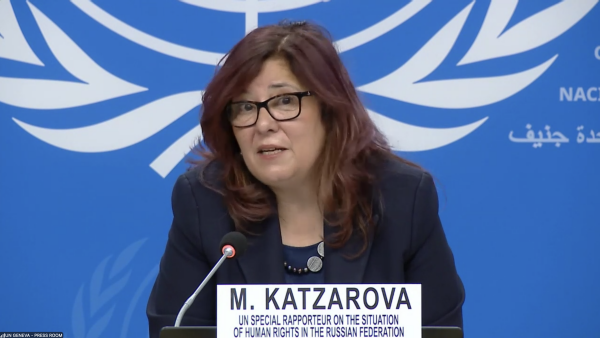
Mariana Katzarova discusses human rights in Russia as a UN Special Rapporteur.
1
1
1
Press Conferences | IOM , OHCHR , UN WOMEN , UNFPA , UNHCR , UNOPS , WHO
UN Geneva briefing: Yemen crisis worsens, urgent aid needed across multiple sectors.
1
1
1
Press Conferences | HRC
Press conference on the latest report of the Independent International Fact-Finding Mission on the Bolivarian Republic of Venezuela to the UN Human Rights Council
1
1
1
Press Conferences | OHCHR
Victims Still Waiting: A Global Briefing on Transitional Justice Around the World
2
1
2
Edited News , Press Conferences | WMO
As world’s water reserves change, countries must prepare for a new reality: WMO
New data showing that rivers were at their lowest level for decades last year provides further evidence that the climate crisis is real and countries must act immediately to protect themselves from the increasing threat to communities and livelihoods, the UN World Meteorological Organization (WMO) said on Thursday.
The key findings from WMO’s State of Global Water Resources 2025 report covering the hydrological cycle and extreme events in the five-year period to last year:
- 2025 was one of driest years for river discharge in 35 years
- Past seven years have seen abnorfmal river flows
- Water storage on Earth’s land surface has decreased in past decade
- Widespread glacier loss across all regions for fourth consecutive year
- Asia and Africa are regions most affected by water-related disasters
- Water data availability has improved, but gaps remain in hard-hit areas
Highlighting the long-term decline in the Earth’s freshwater storage and glacier melt, WMO Secretary-General Celeste Saulo explained that the planet’s water reserves used to act as a planetary “savings account” that absorbed the occasional dry season, avoiding a water crisis. “One of the central stories of the 2025 report is what is happening to that savings account? And the simple answer is that we are depleting it,” she told journalists in Geneva.
Groundwater reserves are equally stretched and have been in decline since 2014, WMO’s report states, with nearly two-thirds of monitored wells worldwide showing levels lower than the historical norm and indicating a shift “further toward deficit…not recovery”.
“At the same time, we are seeing more water-related disasters,” Ms. Saulo said, while also stressing that the currently strengthening El Niño “will increase the risk of drought in some areas, and flooding in others”.
Glaciers disappearing
In 2025, for the fourth consecutive year, every major glaciated region on Earth lost ice mass, leading to short-term hazards including floods and long-term water insecurity, according to WMO.
Responding to a question about whether the changing global water cycle might have contributed to the deadly Nepal-China flooding disaster, Ms. Saulo explained that melting ice and rock was just one factor in the chain of events that ultimately sent a massive and deadly wall of water and debris downstream on 26 August, killing at least 1,367 people.
“You asked if it could happen again? Absolutely; the problem in this region is that there’s 63,700 glaciers at the last count,” she told a Press Conference in Geneva. “Even if you’re looking with remote sensing with satellites at these glaciers, you might see some faults, you might see some slight shifting, that does not mean necessarily catastrophic collapse. So, in order to plan for this, it’s very, very difficult. But the international community is looking very hard at ways in which we can bring people together to solve some of these monitoring issues.”
Data indicates that glaciers shrank between 2023 and 2025 with cumulative losses of 1,400 gigatonnes of water – or about one third of annual fresh water needs.
Every major glacier region on Earth lost ice for the fourth consecutive year.
“All 19 glacier regions around the globe lost ice; in Central Asia, Iceland, the Russian Arctic and western Canada and the United States, it was among the three worst years on record,” said Wayne Jenkinson, WMO’s Director of Hydrology and Cryosphere.
Some regions with smaller glaciers such as Central Europe, the Caucasus, the western Canada and the United States may already have reached “peak water”, Mr. Jenkinson warned.
“After this point, the glacier gives less meltwater each year simply because there is less ice left to melt. That matters for every community downstream that relies on water during hot, dry summers,” he explained.
Narelle van der Wel, WMO’s Head of Cryosphere Monitoring, Predictions and Services, stressed that while some further glacier loss is unavoidable, the eventual scale of the decline is not predetermined.
“Some glacier loss is inevitable, but total loss of glaciers is not yet inevitable,” she said, pointing to emissions reductions as central to limiting future losses.
Preparing for moving baselines
The report does not attribute every observed change to climate change alone. WMO says pressure on water resources and natural variability also contribute.
Mr. Jenkinson said governments need to prepare for “moving baselines” as historical patterns become less reliable.
“The situation 30 years ago is not where we are today,” he said. Countries, he added, need to prepare “for those changes that have really already arrived”.
ends
1
1
1
Press Conferences | WMO , OCHA , WHO , UNICEF , UN WOMEN , OHCHR , IOM , UNHCR
Update on Ebola from WHO and OCHA, update on the situation of children with the beginning of school in Ukraine from UNICEF, UN Women on the impact of the settlers and restrictions on women and girls in West Bank, OHCHR on the recovery of extensive human remains in Gaza, IOM and UNHCR on the new wave of displacement in Yemen
2
1
2
Press Conferences , Edited News | WFP
‘Super El Niño’ and converging crises worsen hunger in South Sudan and across the region - WFP
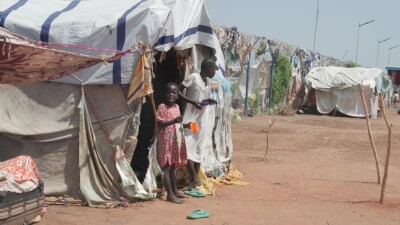
South Sudan’s hunger crisis is becoming increasingly catastrophic as violence, extreme weather and dwindling aid leave millions without enough food, the UN World Food Programme (WFP) warned on Tuesday.
1
1
1
Press Conferences | HRC
Update on the human rights situation in Belarus by the UN Group of Independent Experts on the Human Rights Situation in Belarus
1
1
1
Press Conferences | HRC , OHCHR
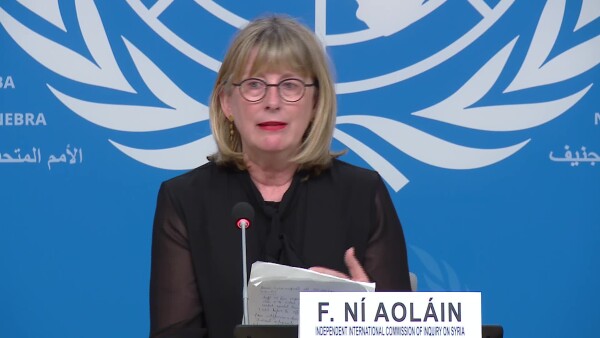
Update on the human rights situation in Syria by the Independent International Commission of Inquiry on the Syrian Arab Republic
1
1
1
Press Conferences | UNOG , IOM , UN WOMEN , UNCTAD , WHO , UNECE
IOM Yemen's Western Coast displacement; UN WOMEN on Gaza; UNCTAD Strait of Hormuz disruptions impacts; WHO Ebola logistics in DRC; WHO smoking and infertility; UNECE Data centres and energy.